
Visual Habits Adjustment
Outdoors and Natural light rule: at least 2 hours a day outdoors, be sun smart and active for 60 minutes perday.
20/20/2 rule: every 20 minutes, take a break from your near vision tasks, such as screen or books, and look at 20 feet away for about 2 minutes.
Elbow rule: keep forearm distance between eyes and books.
Two hours rule: less than 2 hours of reading/screen time after school and don’t sit for too long.
Myopia controlling Spectacles / Eyeglasses

Standard single-focus spectacles do not slow the worsening of childhood myopia but specific designs do.
Myopia controlling spectacles can both correct the blurred vision of myopia and work to slow down myopia progression. They are safe to wear and adaptation is typically easy, with the only side effects being related to the limitations spectacles pose for sport and active lifestyles.
Myopia Controlling Contact lenses
Standard single-focus contact lenses do not slow the worsening of childhood myopia but specific designs do. These specific designs can both correct the blurred vision of myopia and work to slow down myopia progression. The options include soft myopia controlling contact lenses and orthokeratology.
 Orthokeratology contact lenses are worn overnight and removed upon waking, such that no spectacles or contact lenses are required for clear vision during the day. They can require more appointments for fitting than other types of myopia control treatment. Adaptation to the lens-on-eye feeling can take 1-2 weeks but shouldn’t affect sleep. There are significant benefits for water sports and active lifestyles, and since the contact lenses are only worn at home there is low risk of them being lost or broken during wear.
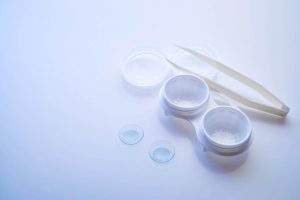
Soft myopia controlling contact lenses are worn during waking hours. They may be daily disposable, or reusable for up to a month. They typically require more appointments for fitting than spectacles but less than orthokeratology. Adaptation to the lens-on-eye feeling typically occurs in a few days. There are benefits in safety with daily disposables being the safest modality, and the number of lenses retained meaning loss or breakage is less of a practical issue.
Low dosage Atropine eye drops 

Atropine eye drops in strong concentrations (typically 0.5% to 1%) are used to temporarily dilate the pupil of the eye and stop the focussing muscles working in a variety of clinical applications. Atropine eye drops for myopia control, though, are a low-concentration (0.01% to 0.05%) with much fewer such side effects. Spectacles or contact lenses are still needed to correct the blurred vision from myopia, as atropine only acts to slow myopia progression.